Behind the Frame: An Interview with Nancy Overton
|
|
Time to read 7 min
|
|
Time to read 7 min


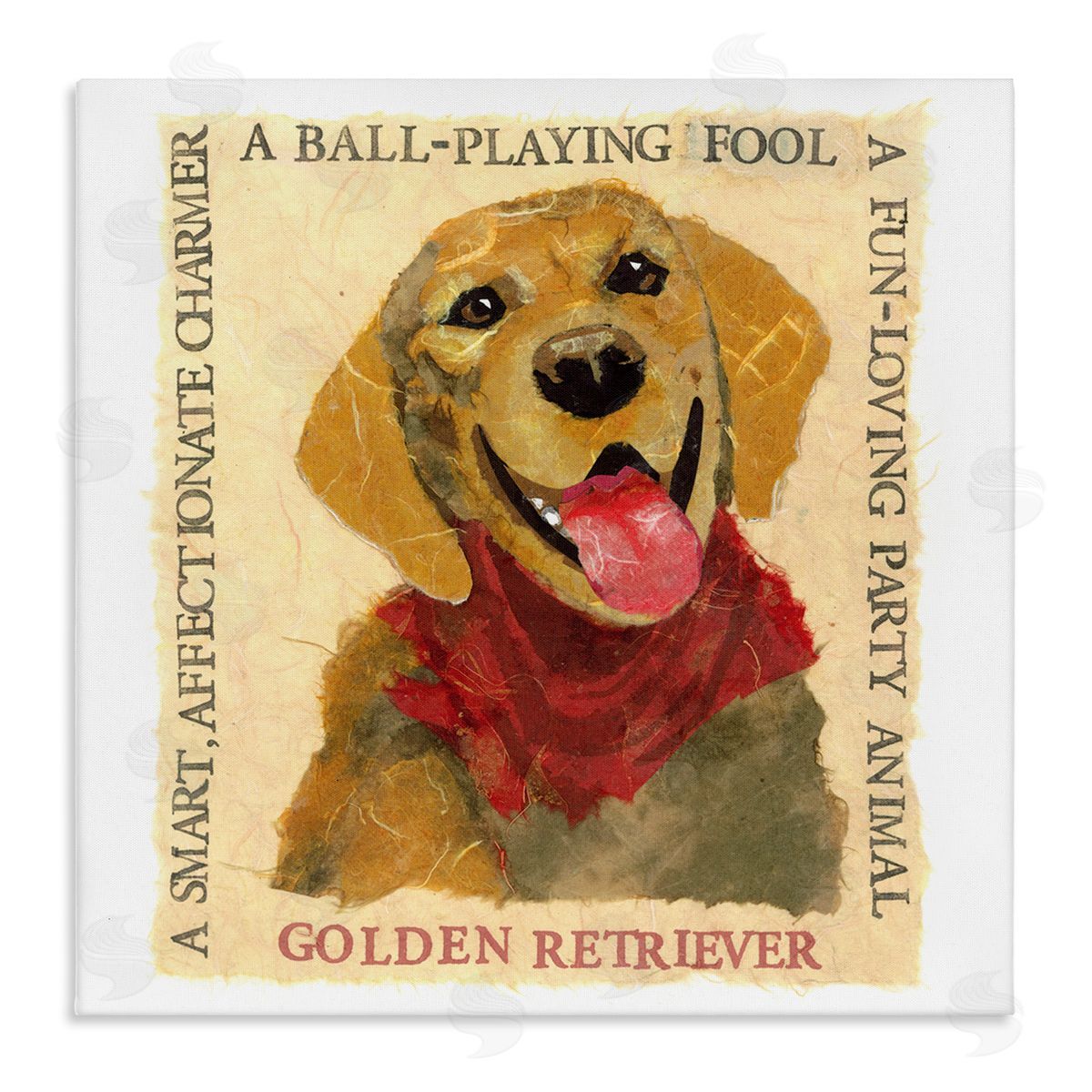
The artwork in the Stupell collection that might best represent my creative process is the Golden Retriever. I did a lot of research about Goldens so that I could develop the copy for the description of the dog’s personality. I referred to many photos and then picked one and opened the mouth to a bigger smile with some teeth showing.
I combined Lokta paper and transparent rice paper to make the various shades of gold and the pink tongue; I combined cut paper and torn paper techniques; I hand-stamped the lettering. The Golden was the first of fifteen dog breed collages, his style and layout setting the standard for the series. I placed the tiny white pieces of paper for the reflections in the eyes last.
I start my day by getting any house chores out of the way…clearing the decks of visual distractions, getting the “to-dos” in enough order that they feel under control, getting through email and working on any marketing chores that demand attention. I get some exercise: the morning dog walk, some time at the gym, or checking out the garden (some weeding and watering). The day is set for studio work.
Taking clues from the Highway Patrol dealing with physical roadblocks, I use detours for my creative roadblocks, taking the side roads, maybe the roads less traveled. I will switch subject matter from still life to landscape, portrait to abstraction, jump to three-dimensional work from two, change media. I usually have a studio project and a living room chair project going at the same time, so I may just change seats. In my time away from the roadblock, I find the road usually magically repairs itself.

The Mediterranean climate of the Bay Area provided endless days of outdoor opportunities, and with our adventurous Mother, the four of us spent days exploring beaches, forests, hills, and trails. My Mother was a gardener, a bird watcher, and a good cook. Spending time in her world was exciting and educational. Most of my subjects I learned to love growing up with her.

My art school education exposed me to many mediums. Graduating in Fine Art, I was primarily an oil painter, with watercolor as my portable medium. I had always done collage, but my Saturday sales forays into basements and garages, discovering old handwritten recipes, hotel receipts, and long-lost love letters, inspired a further expansion into paper and glue. Those treasures and my discovery of Lokta paper some 20 years ago pretty much transformed me into a paper artist.


I like to make collections of related images (four bouquets in related pots, the 8 most popular birds in the USA). I like to research my subjects. If Chickadees are the next bird on my most popular bird list, I am off to the Cornell Lab site, allaboutbirds.org, and photo references online. I’d like to make a pair (do the male and female look different?) and put them in an evergreen (do they like evergreens?). I make a thumbnail sketch and work out the value patterns.

I enlarge the sketch and do a detailed drawing of the birds. I go to my paper collections (some rolled sheets in baskets, some cut and filed in folders) and put together a potential palette. I decide I will cut (not tear) the paper for these little birds, as I think I will have to cut the pine needles (too small to tear with my big fingers) and would like them to go together. I make a copy of the bird drawings and use them as pattern pieces for the shapes within the birds that I cut out of the colored paper. I make another copy of the birds and glue the cut colored pieces to the copy. Hopefully, my paper choices have worked, or I will be selecting other papers and trying again.
When I’ve made both birds, I cut them out and place them together on my 12” x 16” 140 lb Arches watercolor block and start to cut branches and pine twigs, placing them around the birds until I get a composition that I like.
I grab my large tracing pad and trace all the pine pieces and the birds in their places so that I can move them to glue them one at a time. Every time I glue a piece, I place the tracing over the top to make sure I’ve glued it in the right place. I switch from the diluted Elmer’s School glue that I’ve used to glue the paper to Beacon Craft Glue to place the 5 mm plastic half-round eyeballs on the birds. I take a final look, and I sign my name.

At the moment, I am working on a commission to make three papier-mâché yellow-billed Magpies (found only in California) for Christmas gifts, while finishing a “parliament” of Pygmy Owls. I use many of the same papers for my birds as I do for my paper collages, though for birds I may use many more print and decorative papers for feather details. I use sheet music on many of my songbirds.


Having studied the art of painting and watercolors in the 1960s, Nancy Overton's world of art consists of paper and glue; torn and cut paper collage, and papier mâché. Using handmade papers from Japan and Nepal, and collected papers, Nancy creates intricate pieces of art through found materials. Through her themes of birds, animals, and flowers, her goal is to increase awareness of the natural world. Through her food collections, she aims to celebrate wine, tea, and cookies.
Nancy Overton is a 1965 graduate of the California College of Arts and Crafts with a fine arts degree in Painting. Currently residing in California, she calls Sacramento her home.